
400-6505-735

Products
CIF focuses on material surface treatment technology, providing customers with professional instrument equipment and application process solutions for cleaning, debonding, etching, coating and other aspects!


Product Parameters
Products Details

Application
The applications include automotive parts cleaning, laboratory instrument cleaning, electronic product cleaning, glass lens cleaning, shoe material fabric cleaning, medical device cleaning, packaging and printing cleaning, food sterilization, agricultural breeding, etc.
Application scenarios
Application scenario 1 : The application of this device lies in the cleaning of automotive parts. With the growing popularity of cars, there is an increasing demand for plasma cleaning technology in various stages of automobile production, including bonding treatment for car lights, sealant strip treatment, instrument panel treatment and interior treatment for automobiles.
Application scenario 2 : The device is designed for the cleaning of electronic products. In processes such as screen bonding, circuit board cleaning, and IC production photoresist removal, traditional methods (such as alcohol) often fail to achieve desired results and may cause environmental pollution. By utilizing low-temperature plasma jet technology, impurities can be effectively eliminated while significantly enhancing material adhesion. This technology proves highly effective in screen bonding, circuit board cleaning, and IC photoresist removal.
Application scenario 3 : This device is designed for the cleaning of glass lenses in the glass lens industry, particularly in areas with higher requirements that involve surface coating. Prior to coating, it is essential to thoroughly clean the surface. In addition to conventional cleaning methods, a low-temperature plasma cleaning process is incorporated afterwards. This process not only effectively eliminates dust and residues from previous procedures but also enhances the material's adhesion properties. Notable applications include high-end glass markets, optical lenses, cameras, and camera lenses.
Application scenario 4 : The device is utilized for the purpose of cleaning the lamination on printed packaging. In current printing and packaging production, a film or foil is typically applied to the surface in order to ensure texture, waterproofing, and enhance the grade of printed products. The conventional method employed is UV coating, which tends to be relatively complex with a low yield and often results in adhesive failure. By utilizing low- temperature plasma technology, costs can be reduced while improving overall yield. Furthermore, prior to applying adhesive glue onto the box surface, cleaning it with plasma effectively enhances adhesion and facilitates easier gluing.
Application scenario 5 : The device can be utilized for cleaning fabric and shoe materials. In the current fabric and shoe materials industry, there are stringent requirements placed on the surface properties of these materials. This is because the surface properties directly determine crucial factors such as dyeing rate, affinity, gloss, and adhesion. Traditionally, chemical agents have been employed to process the surface properties of these materials; however, this method consumes a significant amount of water and leads to pollution during the process. By utilizing low-temperature plasma treatment on the surfaces of fabric and shoe materials, active particles effectively interact with the material surfaces by inducing processes like etching, oxidation, reduction, cross-linking, polymerization among others. These reactions bring about changes in both chemical composition and physical-chemical properties of material surfaces resulting in alterations in hydrophilicity, adhesion strength, dyeability, resistance against shrinkage, dirt resistance, and conductivity.
Application scenario 6 : This device can be used for cleaning medical equipment. High molecular materials are widely used in the medical field, such as medical instruments, stents, sensors, etc. Low-temperature plasma has good effects on the cleaning, sterilization, bonding, and modification of these materials.
Application scenario 7 : This device is designed for the cleaning and sterilization of food and seeds, making it suitable for applications in the fields of food processing and agricultural breeding. These sectors face challenges related to food sterilization and seed germination. The plasma jet cleaning device emits active groups that effectively act on the surface of food, providing a reliable method for sterilization and preservation without causing pollution or affecting the taste of food. Moreover, when applied to seeds, the plasma groups not only eliminate bacteria but also enhance seed surface characteristics, resulting in improved germination rates as well as increased resistance against pests and diseases. Additionally, this device can be utilized to produce biologically active water which is highly beneficial for bean sprout production and fruit cleaning.
Product Features
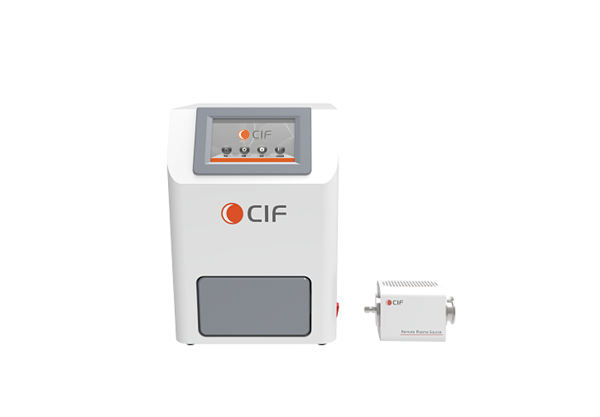
1. Intelligent Operation It is equipped with a 4.3-inch color bilingual interface. All process parameters are monitored in real time, and all stored data is fully traceable.
2. PLC Intelligent Control The integrated intelligent PLC system can be connected to production lines and supports remote monitoring and data exchange.
3. Stable Performance Fitted with a dedicated high-performance power supply, featuring constant power output, strong anti-interference and rapid response.
4. Wide Temperature Operation & Long Service Life Capable of stable operation from -25℃ to 50℃. It ensures 10,000 hours of trouble-free running with low maintenance costs.
5. Multiple Nozzle Options A selection of nozzles is available to adapt to various working conditions and fulfill precision process requirements.
6. Low-temperature & Non-destructive Processing The unit comes with automatic fault detection and alarm. Processing is performed below 50℃ to protect sensitive materials from damage.
 Recommended Products


About Us
Introduction Culture History HonorNews
News Article VideoService
After-sale ServiceNavigation
ProductsSolutionContact Us 400-6505-735
 CIF WeChat Service Account
 CIF Tiktok


 2025-12-26
 Add WeChat